

Enzonix
Shared Compute - General Compute
$5.00/mo
1 vCPU · 1 GB · 20 GB
Choose location
Ashburn, United States
| Provider | Plan | vCPU | RAM | Disk | Regions | Billing | Price |
|---|---|---|---|---|---|---|---|
| Enzonix | Shared Compute - General Compute | 1 | 1 GB | 20 GB | Ashburn, United States | Fixed price | $5.00/mo |
| Enzonix | Shared Compute - General Compute | 1 | 1 GB | 20 GB | Amsterdam, Netherlands | Fixed price | $5.00/mo |
| Enzonix | Shared Compute - General Compute | 2 | 4 GB | 80 GB | Amsterdam, Netherlands | Fixed price | $9.00/mo |
| Enzonix | Shared Compute - General Compute | 2 | 4 GB | 80 GB | Ashburn, United States | Fixed price | $9.00/mo |
| Enzonix | Shared Compute - General Compute | 4 | 8 GB | 160 GB | Amsterdam, Netherlands | Fixed price | $16.00/mo |
| Enzonix | Shared Compute - General Compute | 4 | 8 GB | 160 GB | Ashburn, United States | Fixed price | $16.00/mo |
| Enzonix | Shared Compute - General Compute | 8 | 16 GB | 320 GB | Amsterdam, Netherlands | Fixed price | $32.00/mo |
| Enzonix | Shared Compute - General Compute | 8 | 16 GB | 320 GB | Ashburn, United States | Fixed price | $32.00/mo |
| Enzonix | Shared Compute - General Compute | 1 | 1 GB | 20 GB | Ashburn, United States | Hourly | $0.007/hr |
| Enzonix | Shared Compute - General Compute | 1 | 2 GB | 40 GB | Ashburn, United States | Hourly | $0.01/hr |
| Enzonix | Shared Compute - General Compute | 2 | 4 GB | 80 GB | Ashburn, United States | Hourly | $0.015/hr |
| Virtualized | Shared Compute - General Compute | 2 | 4 GB | 40 GB | Phoenix, United States | Fixed price | $12.49/mo |
| Virtualized | Shared Compute - General Compute | 3 | 6 GB | 60 GB | Phoenix, United States | Fixed price | $17.49/mo |
| Virtualized | Shared Compute - General Compute | 4 | 8 GB | 80 GB | Phoenix, United States | Fixed price | $22.99/mo |
| Virtualized | Shared Compute - General Compute | 8 | 16 GB | 160 GB | Phoenix, United States | Fixed price | $44.99/mo |
| Virtualized | Shared Compute - General Compute | 16 | 32 GB | 320 GB | Phoenix, United States | Fixed price | $79.99/mo |
| Virtualized | Shared Compute - General Compute | 32 | 64 GB | 640 GB | Phoenix, United States | Fixed price | $139.99/mo |
Gitea Instant App
Gitea is a lightweight self-hosted Git service for repositories, code review and issues, similar to GitHub. Compare live VPS prices, CPU, RAM, disk and regions, launch Gitea on the plan you choose, and keep root access.

Gitea
Instant App on marketplace VPS
Live marketplace offers
Choose billing and size, compare providers side by side, pick a location, then launch.
Shared Compute - General Compute
$5.00/mo
1 vCPU · 1 GB · 20 GB
Choose location
Ashburn, United States
1 provider
Gitea is a lightweight, self-hosted Git service for repositories, code review, issues and a package registry. It also includes Actions for CI, with runners you add yourself. People look for it when they want that GitHub-style workflow on a server they administer.
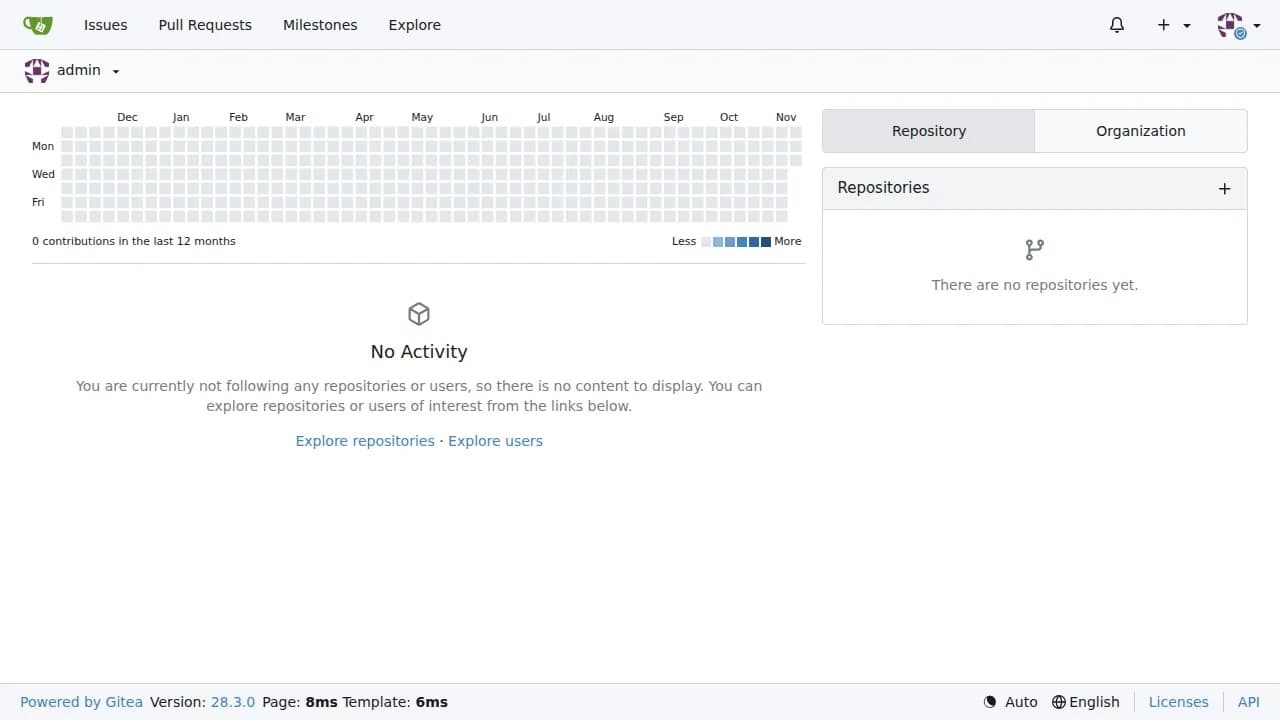
Host private and public repositories on the plan you chose. Clone over HTTPS from the site, or over Git SSH using the details in your server notes. You decide what stays private.
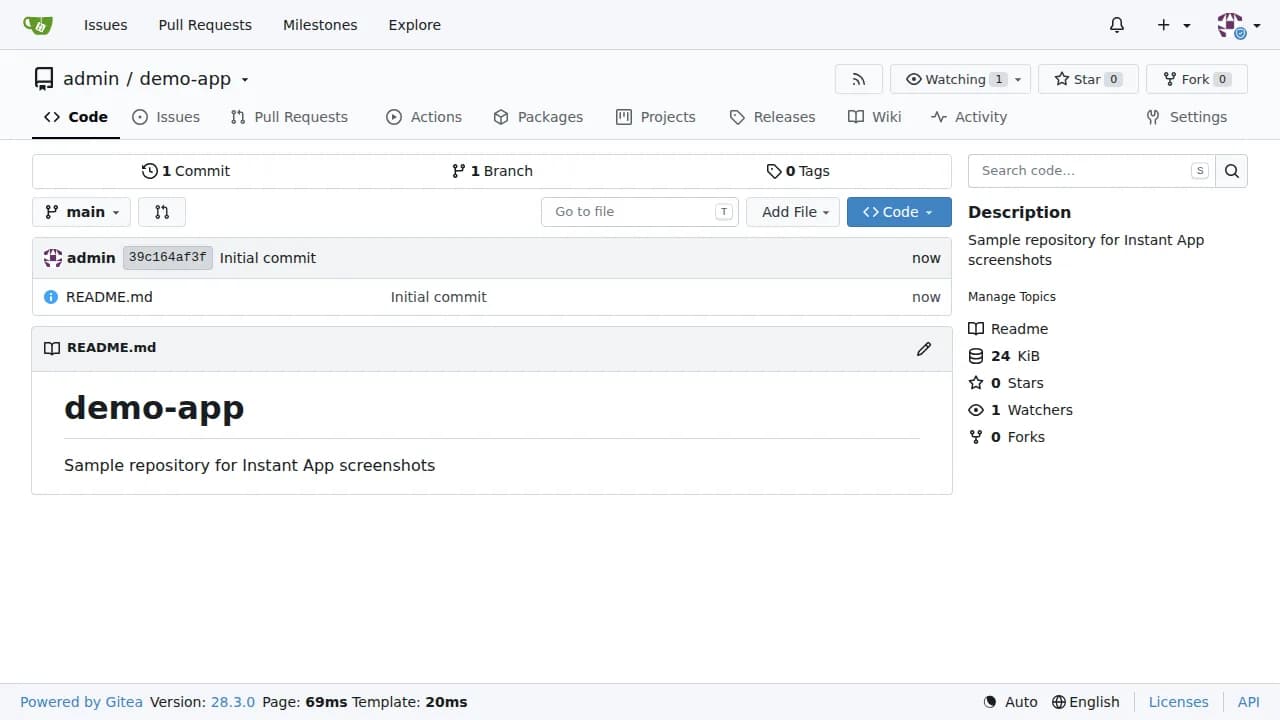
Track work and review changes next to the code. The workflow is familiar if you have used GitHub: issues, pull requests and comments on the diff, on your own server.
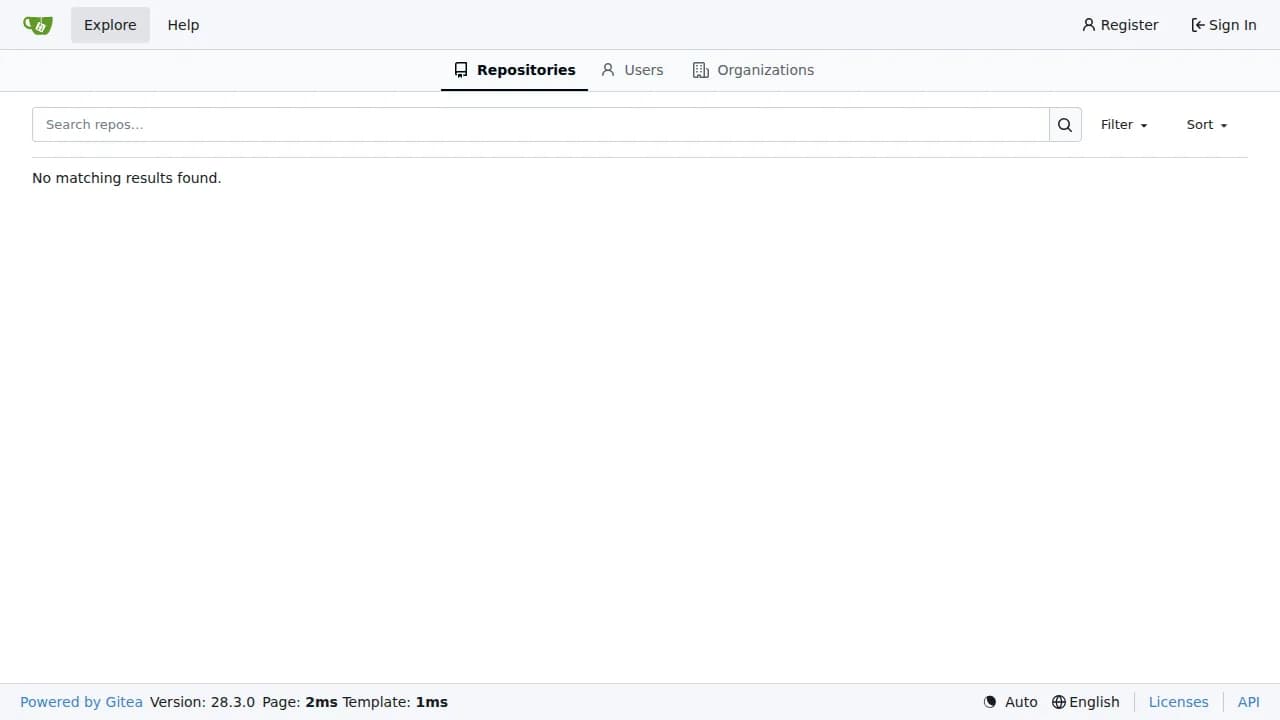
Organizations and public repositories show up in Explore once you publish them. A private forge can stay closed to anonymous visitors. That choice is a setting you control after sign-in.
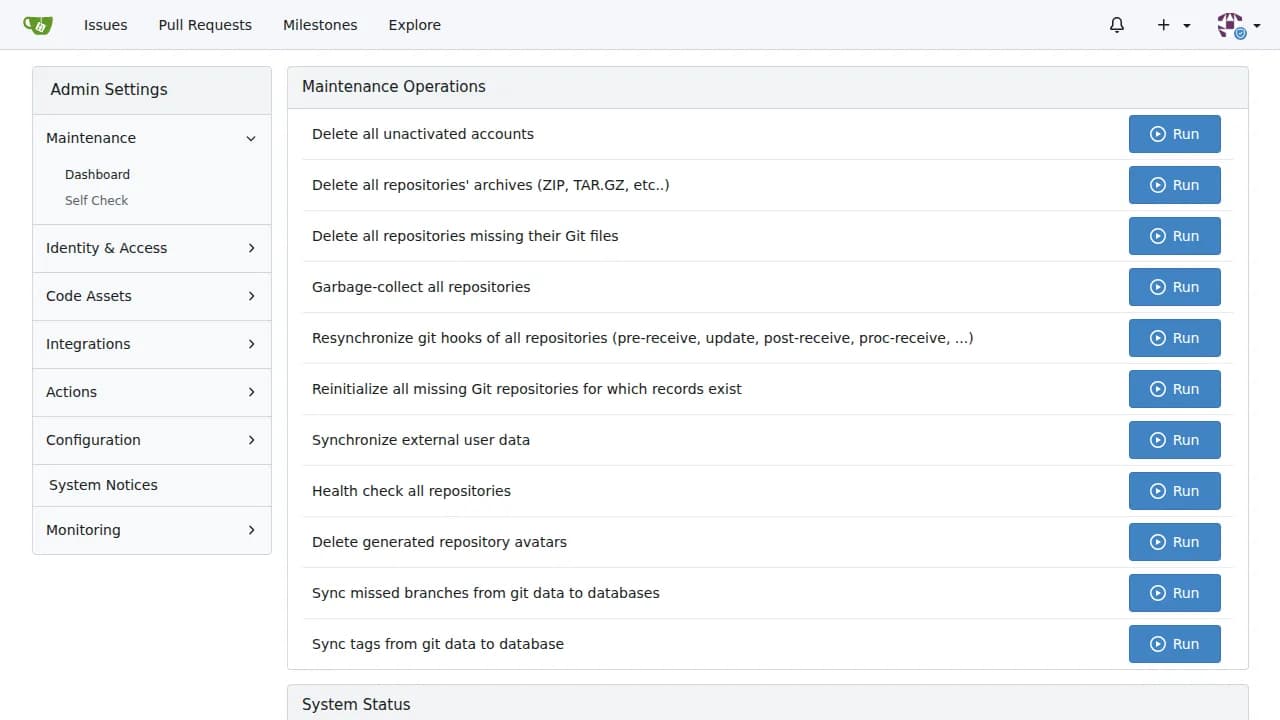
Users, authentication and site settings are yours after login. The admin account is created for you.
Compare live Gitea VPS plans from independent providers, then self-host a lightweight Git server on the offer you pick.
See live prices, regions and plan sizes before you buy. Shop a lightweight Git server across independent providers, from the 1 vCPU and 1 GB floor upward.
Pick a plan and Gitea is prepared on that VPS for you, including the admin account. You still get root access when you add a domain, mirrors or backups.
Compatible offers list cities and countries. Clone and push traffic feels the region you pick.
Repositories, issues and user accounts live on your VPS. You control SSH, visibility and how the disk is backed up.
Most Gitea VPS pages sell one company's servers. NodeRings lists Compute Instance plans from independent providers so you can compare Gitea-ready offers by price, size and region, then launch on the one that fits.
Gitea Instant App prepares Gitea on the provider VPS you selected. NodeRings does not operate that hardware or sell its own VPS fleet.
Compare plans, pick a provider offer, and launch Gitea on that server.
01
Browse live offers below. Every general-compute plan is listed — pick the size you want. Gitea's own note for a small team is often 2 CPU cores and 1 GB RAM; compare 2 vCPU when more than one person clones at once.
02
Choose the provider plan and region. A domain and any CI runners come after the server is up.
03
Confirm checkout and wait for the server. Then open the site and sign in with the username and password from your server notes. You keep root SSH.
Gitea is light. The project says a Raspberry Pi 3 can handle small workloads, and that 2 CPU cores and 1 GB of RAM are typically enough for a small team. A quiet personal forge can start around 1 vCPU, 1 GB RAM and 20 GB disk. Repository size, packages and CI on the same box are what push the plan up.
| Workload | Illustrative starting point | Note |
|---|---|---|
| Personal repositories, little traffic | 1 vCPU / 1 GB RAM / 20+ GB disk | Suggested start for a quiet private Git server. |
| Small team, Gitea's own note | 2 vCPU / 1 to 2 GB RAM | Gitea says 2 CPU cores and 1 GB RAM are typically enough for small teams and projects. The second core helps clones and diffs. |
| Packages, Git LFS, or a public forge | 2 vCPU / 2 to 4 GB RAM and more disk | Large files, package registries and anonymous traffic need more RAM and disk than an idle personal server. Gitea does not publish a universal disk minimum. |
| Actions builds on the same VPS | Often 2+ vCPU / 4 GB RAM and more disk | The runner is the heavy part. Builds also execute repository code. Many people keep the runner on another machine. |
These are starting points, not guarantees. Needs depend on repository size, LFS, packages, public traffic and whether a runner shares the VPS.
This is self-hosted Gitea on a provider VPS, not managed Git hosting. You pick the plan. Gitea is prepared on that server. Day-to-day care of the forge stays with you.
Gitea is prepared with its built-in SQLite database, and the admin account is created for you. Sign in with the username and password from your server notes.
Root SSH on the VPS. You own DNS, TLS, users, backups and day-to-day Gitea care unless a provider product says otherwise. Git SSH details are in your server notes, separate from the VPS login.
A domain, TLS certificates, backup jobs and CI runners are not part of the Instant App. You add those after the server is ready. This install uses SQLite. Switching databases later is a project of your own.
NodeRings helps with marketplace, billing and console. Provider hardware issues go to that provider. Looking after Gitea on the server is yours.
Gitea is a self-hosted Git service. It includes repositories, code review, issues, a package registry and CI. The project describes it as lightweight, and as similar to GitHub, Bitbucket and GitLab. On this page you run it on a VPS you administer.
For a lot of teams, yes. You get Git hosting, pull requests and issues on your own server, which is the workflow they were using GitHub for. Actions, packages and access rules are Gitea's, and you run the machine. GitLab CE, the heavier DevOps suite, is a separate Instant App on this marketplace.
Gitea stays small: Git, issues, pull requests and a package registry on a modest VPS. GitLab CE is the heavy Omnibus server, with a published baseline of 8 vCPU and 16 GB. Both are Instant Apps here. Pick Gitea for a private forge on a small plan. Pick GitLab when you want that larger platform and you are ready to pay for the RAM.
No. NodeRings is a marketplace. Independent providers list VPS plans. You pick a plan, Gitea is prepared on that provider server, and you manage Git from there.
No. You get a virtual machine with Gitea prepared for you, plus root access. That is different from a managed Git host that owns upgrades and backups for you. DNS, TLS and day-to-day care remain yours unless a provider product says otherwise.
It prepares Gitea on the VPS you choose so you skip hunting through the install by hand. It is still your self-hosted server, not a separate managed hosting brand.
A quiet personal forge can start around 1 vCPU, 1 GB RAM and 20 GB disk. Gitea's own note for small teams is 2 CPU cores and 1 GB RAM. Compare a 2 vCPU plan when several people clone and review at once, and more disk when repositories, LFS or packages grow.
SQLite, built into this install. Gitea says that is a fit for small workloads, and that SQLite does not scale the way PostgreSQL or MySQL does. The same docs say converting between database types is not a well-tested process, so treat SQLite as the database you will keep. A large public forge is a different plan than the one this Instant App prepares.
You confirm the plan and finish checkout. When the server is ready, open the site and sign in with the username and password from your server notes. Keep that password private.
HTTPS clone URLs use the site address. Git SSH uses a separate access path from root SSH on the VPS, and those details are in your server notes.
Gitea can migrate or mirror repositories after you sign in. You do that in Gitea. This Instant App does not import a GitHub organization during checkout.
Gitea includes Actions, its CI system. This Instant App does not register a runner. Builds on the same VPS compete with Git for CPU and RAM, and a runner executes code from the repositories. Many people keep the runner on another machine.
Yes. Each compatible plan lists available regions. Pick a city near the people who clone. A public forge with anonymous traffic is a heavier load than a private team server in the same region.
You do, unless you add backup tooling yourself or a provider product explicitly includes it. Repository data on this install lives with the SQLite database on the VPS. Back both up, and test a restore before you need one.
You can move to a larger plan from the same or another marketplace provider when repos or traffic grow. Exact options depend on the provider. Compare offers again when you need more CPU, RAM or disk.