If you run a hosting company, you have heard some version of "send us an API token and we will resell your products." Most people say no. The token is the keys to every machine they have. Some say yes, and lose their customers to the reseller.
NodeRings is a marketplace for infrastructure. Virtual machines are what you can buy today. Game servers, dedicated servers, and sandbox VMs are what we are building toward, along with whatever comes after those. A customer gets one place to compare what is listed and then run what they bought. A provider keeps the machines they already operate. We sit in between, with the storefront, the account, and the order.
The drawing below is the path a virtual machine takes today. It is the one from the docs. Later products will cross the same line. Look at it once before the rest of this.
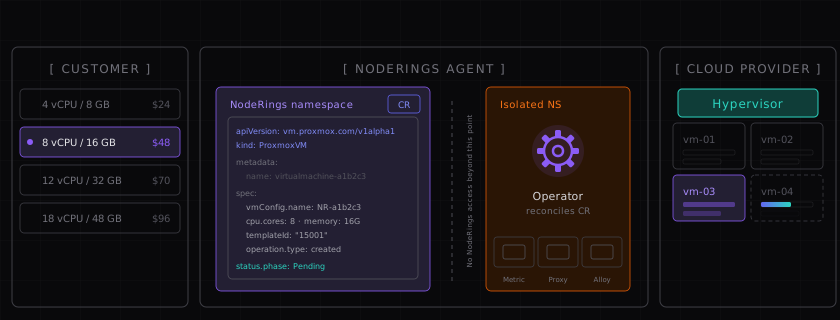
Start on the left. Someone picks a plan. That has to become a real virtual machine on a Proxmox, VirtFusion, or SolusVM host the provider already runs, and it has to happen without us logging in.
The middle of the picture is that agent. One namespace on it is ours to write into. The order shows up there as a short spec. You can read the example: name NR-a1b2c3, eight cores, 16 GB, which template to clone, status still pending. There is no password in it. There is nothing in there that would let us open the hypervisor ourselves.
Then the dashed line. The label on it says we do not get past that point, and that is the design, not a slogan. On the far side, the provider runs an operator in their own cluster. The credential lives next to that operator, in a namespace we cannot read. The operator watches for orders, talks to the hypervisor on the local network, and the VM appears on the right, on their hardware, with a name you can pick out of the list.
Stop, start, the console, a backup: same loop, smaller. We update the order. Their operator notices and does the work. The hypervisor only ever trusts software the provider installed.
The agent is open source. Worth a read before you install it. Installing it is the onboarding. The password never gets pasted into our site.
How to participate in the marketplace
Install the agent. That is the piece on your side that takes the orders.
A node is the host that will run the VMs. The name has to match the hypervisor, and you pick the region, the storage, and the first VMID we are allowed to use. Cloud-init is how the guest gets a hostname, keys, and a static address. VM templates are the images you already built, each one tied to that cloud-init and to a node.
If you don't already have your own IPAM, add the addresses. A prefix for IPv4, one for IPv6, and mark the ones you already use so they stay out of the pool. Then create a plan: a template, a region, and a price. The check builds a short-lived VM on that node, hands it an address, and tries to get in. Pass that, and customers can buy it.
Install the agent
1 of 8
Payment goes through Stripe Connect. You link your own Stripe account to ours, so a sale lands in your account. We take a small platform fee on the way through. That fee keeps the lights on and pays for the work still left on the platform.
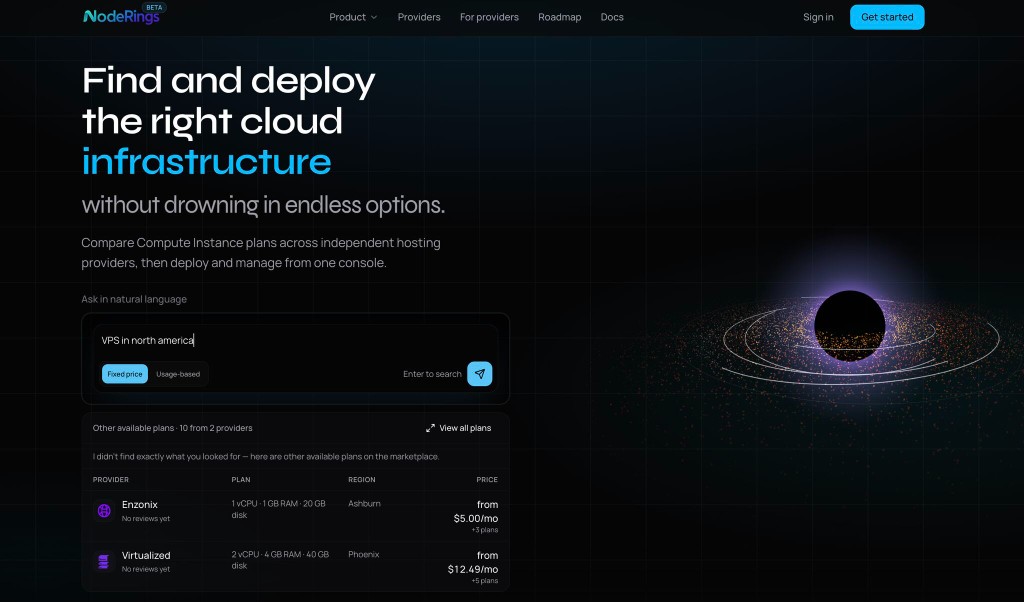
Most people land on noderings.com, type what they want, and the providers who can sell it show up underneath with a price. Pick one, and that is the order. No second website, no email to the host.
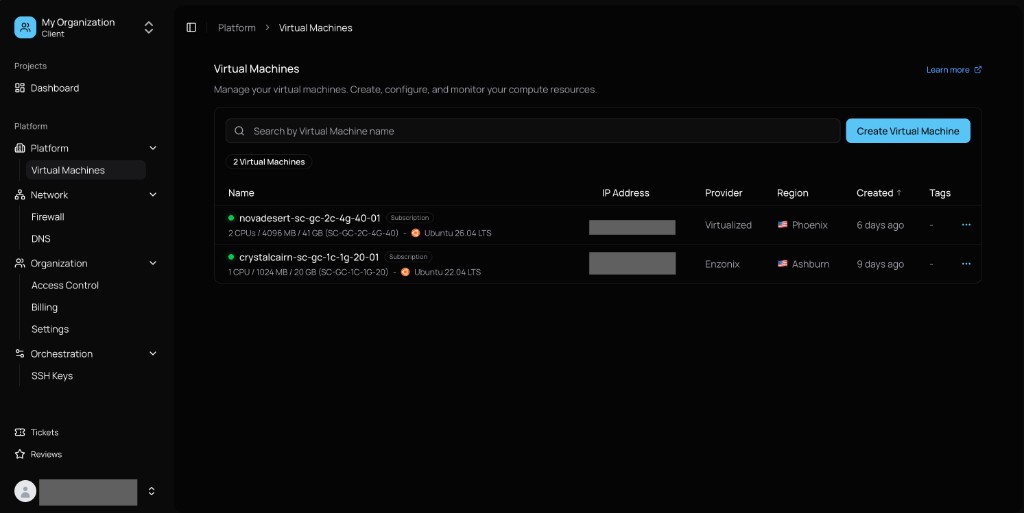
Once the machine exists, it shows up next to the others, even when they come from different providers. Same list, same account. Phoenix from one host, Ashburn from another. You do not log into two panels to see them.
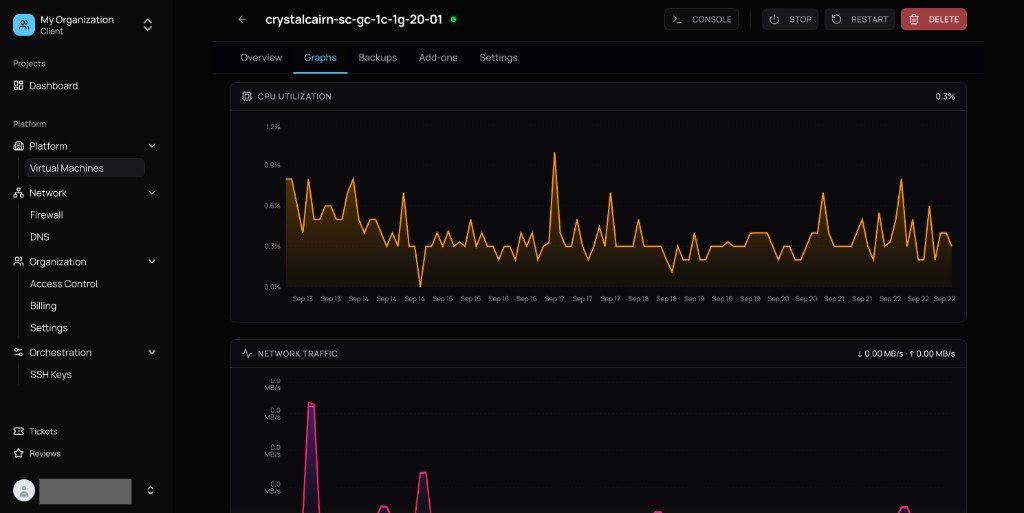
Open a machine and the rest of its life is on that page. Stop it, restart it, open the console, reinstall the OS, take a backup, or buy another IP. The graphs are CPU use and network traffic for that machine.
And the rest
Tickets are their own system that we built. A ticket from a user goes out by email, and a reply to that same email lands back on the ticket as the response. That is enough to hook it up to the ticketing system you already use. If you have to hold someone for abuse, you can lock their VM or ban them from your store. Your company has a page at noderings.com/providers, GeoDNS is free, each VM has a firewall, and we built an MCP so an AI can buy resources from your store.
Most of that landed because people on the beta asked for it. Anything still missing goes on the roadmap. The click-by-click setup is in the docs, under how it works.
A few of us founded this startup and have been working on it for over a year. We wanted to give something back to the community. Hosting providers were spending months rebuilding the same pieces, while the hyperscalers already had them. The point was to make that gap smaller.